The movie
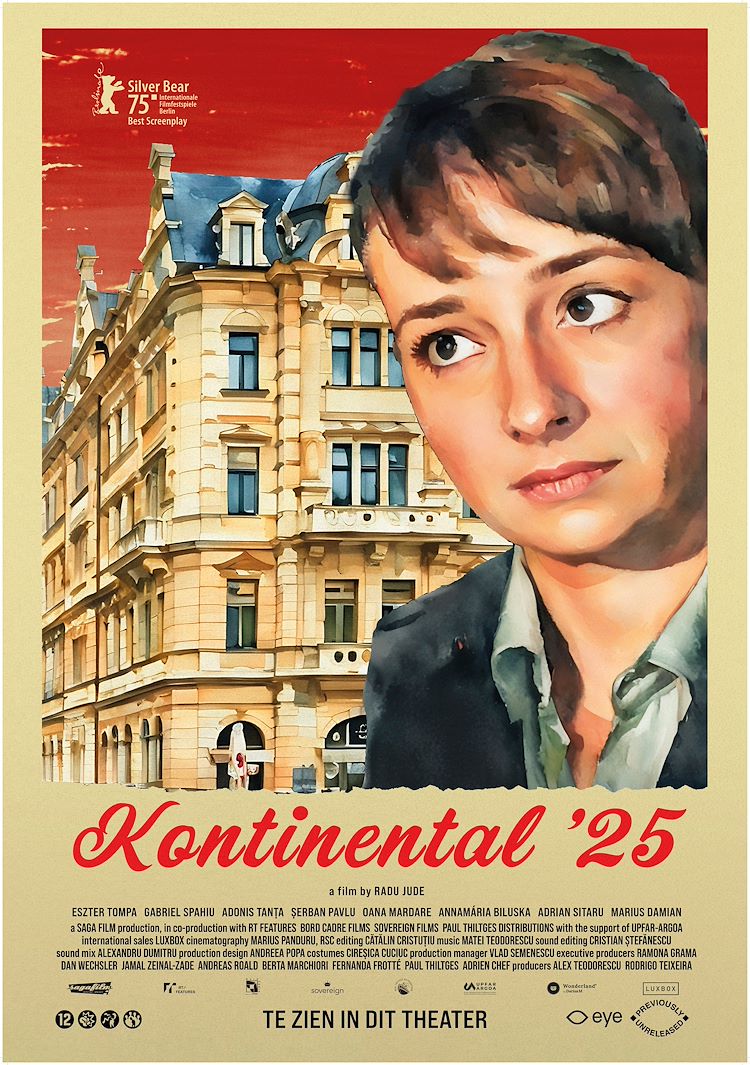
Kontinental ‘25 (Previously Unreleased)





A typical Radu Jude narrative in which he weaves satire together with razor-sharp analyses of contemporary Romania, in slightly absurd stories filled with ideological critique, philosophical quotations, and unexpected essayistic digressions.
Description
Once again, an irony-laden narrative by Radu Jude about Romanian society and humanity’s place within it. During the 013 International Film Festival in Tilburg, the film was shown in the Netherlands for the first time. Now Kontinental ’25 returns in the Previously Unreleased series.
Court bailiff Orsolya must, as part of her job, execute a court order and evict a gambling-addicted alcoholic who has illegally occupied a basement. This has far-reaching consequences for both the addict and her own conscience; he says he will pack his things, goes into the basement, and commits suicide. The shock is immense for Orsolya, in her forties. Was the eviction morally justifiable? Could she have acted differently? And what is her role as an executor of judicial orders serving real estate developers in Cluj, a provincial Transylvanian city eager to ride the wave of market-driven neoliberalism?
These are some of the questions the director sends his protagonist to grapple with. In confusion, Orsolya (Eszter Tompa) seeks answers from colleagues and friends, hoping to hear something that might ease her guilt. The detective in charge assures her: “I see no reason to arrest you, however great your need for self-punishment may be.”
Kontinental ’25—an allusion to Roberto Rossellini’s Europa ’51, in which Ingrid Bergman’s unhappy diplomat’s wife turns to charity work—is once again a typical Radu Jude story. The director intertwines satire with razor-sharp analyses of contemporary Romania, in lightly absurd narratives filled with ideological critique, philosophical quotations, and unexpected essayistic digressions.
Notably, Jude (Aferim!, Bad Luck Banging or Loony Porn, Do Not Expect Too Much from the End of the World) shot Kontinental ’25 almost entirely on an iPhone to give the film an unvarnished contemporary feel; the aesthetics of polished imagery, he argues, would too easily obscure harsh reality.