The movie
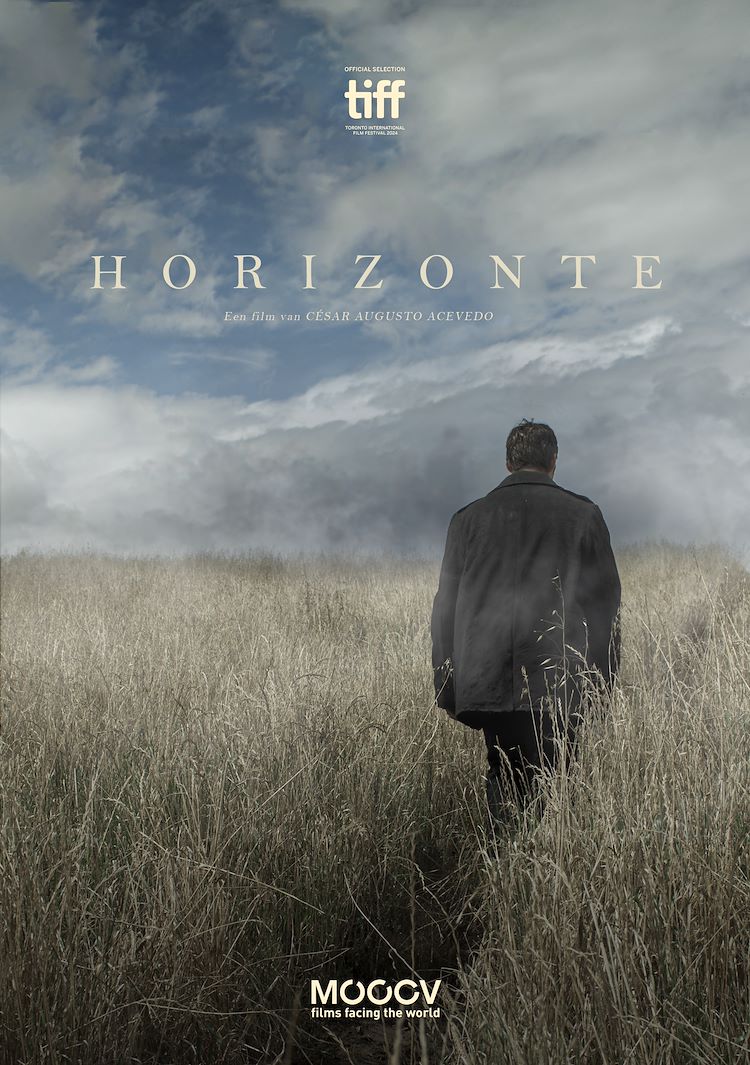
Horizonte

César Augusto Acevedo’s long-awaited second feature film (after La Tierra y la Sombra from 2015, which won the Caméra d’Or at the Cannes Film Festival) is a magical-realist, psychological, and philosophical drama in which the cinematography turns the Latin American landscape into a third protagonist.
Description
Basilio (Claudio Cataño) returns to his home and to his mother Inés (Paulina García). He has been missing for a long time and is now, like his mother, dead. The two spirits find no peace. They embark on a spiritual journey in search of Basilio’s missing father, hoping for redemption from all the wrong decisions they made during their lives.
Together, they travel through their war-torn country, trying in vain to make contact with the living along the way. Gradually, they come to realize that great sacrifices are required to escape their situation.
Horizonte is loosely structured and frequently shifts between different time periods, reflecting the way memory and reflection work in reality. Its dark dream logic and elements of magical realism are complemented by an equally ominous and minimalist production design, enhanced by a restrained and carefully timed use of visual effects. The cinematography by Mateo Guzmán Sánchez—often shrouded in wisps of mist—has an elegant undertone, serving as a powerful metaphor for both the war and the memories of it, particularly in the long takes where characters slowly fade from view.
This raw yet intense visual style is accompanied by an equally impressive soundscape, especially through the original score. This long-awaited second feature by César Augusto Acevedo (following La Tierra y la Sombra from 2015, which won the Caméra d’Or at the Cannes Film Festival) is a magical-realist, psychological, and philosophical drama in which the camera turns the Latin American landscape into a third protagonist. The film explores the destructive nature of humanity and our urge to dominate others—by any means necessary.