The movie
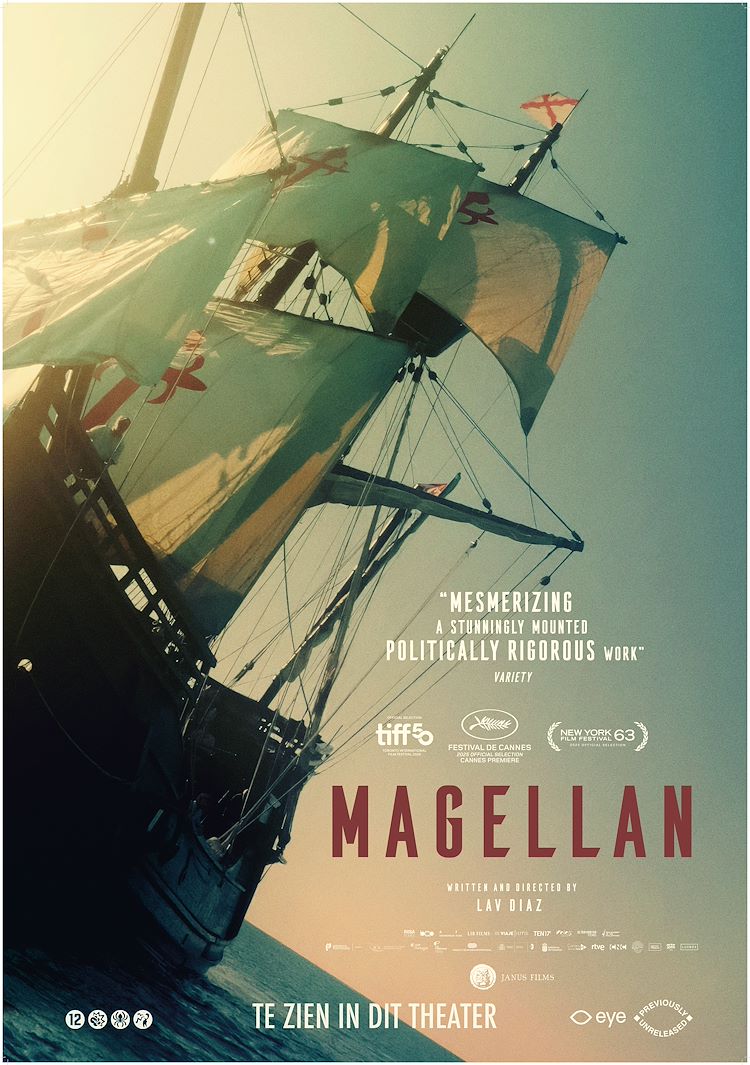
Magellan (Previously Unreleased)






Gael García Bernal is Magellan, the Portuguese explorer who landed in the Malay Archipelago and subjugated the local population through looting and destruction, in this decolonizing portrait by Filipino master Lav Diaz.
Description
Gael García Bernal is Magellan, the Portuguese explorer who landed in the Malay Archipelago and subjugated the local population through plunder and destruction. This decolonizing portrait of a colonizer, commissioned by the Spanish crown, is directed by Filipino master Lav Diaz.
In 1511, Magellan lands in Malacca, one of the most important trading and religious cities in Malaysia. The Portuguese explorer’s journey has been long and arduous. Having endured hunger, storms, and a mutinous crew, the ambitious Magellan has finally arrived, ready to claim his fortune. What follows is a merciless campaign of conquest and looting across the Malay Archipelago by a man driven by the belief that the “heathens” of Asia must be converted to Christianity—by persuasion if possible, by the sword if necessary.
Magellan’s actions as a colonizer in the name of the Spanish crown spread fear but also ignite a series of violent uprisings among the local population; the paranoid tyrant he has become ultimately loses control of the situation. The legendary explorer who once fearlessly sailed the world’s oceans is revealed as a ruthless mass murderer.
For Magellan, Lav Diaz cast a well-known actor in the lead role for the first time: Gael García Bernal (Neruda, The Motorcycle Diaries, Y Tu Mamá También). Diaz allows him to embody both the human and inhuman sides of Magellan, thereby dismantling the myth—still revered in Spain—of the stern but just colonizer. The epic Magellan has already been compared to anti-colonial classics such as Werner Herzog’s Aguirre, the Wrath of God (1972) and Gillo Pontecorvo’s Queimada! (1969).
As in Herzog’s portrait of the mad Aguirre, the power of nature plays a major role; Diaz focuses in long takes on raindrops and flowers, allowing the viewer to almost dissolve into the green of the jungle. The stunning cinematography is by Arthur Tort, the regular collaborator of Albert Serra.